In This Article
(Click the links below to move easily to sections of this article)Why Change Efforts Don’t Last
Avoiding the Trap of Success
Making Your Change Effort Last
Kotter Leading Change Model Summary Chart
Video: Anchoring Change in the Culture
Quiz: How Well Do You Understand Anchoring Change
Kotter Leading Change Article Series
5 Strategies for Building Consensus for Organizational Change
Get a FREE infographic that summarizes Kotter's Leading Change Model.
Why Change Efforts Don’t Last
 Few outcomes are worse for an organization than devoting significant resources and time to an institutional change effort only to have the enterprise revert to its old way of doing things.
These outcomes hurt employee morale and breed cynicism. It also makes employees and lower level managers less committed to the next great organizational initiative that senior leadership wants to sponsor.
The failure to implement lasting change frequently occurs because senior leaders underestimate the difficulty of changing an organization’s culture. As anyone knows who has lived through a merger, changing an organizational culture is a long and difficult process.
The eighth and last step of John Kotter’s Leading Change Model (#CommissionsEarned) is a critical activity for making sure that the new changes the organization has achieved are lasting. Step eight anchors change in the organizational culture.
Change won't be permanent unless you take steps to make it last. Share on XAvoiding the Trap of Success
 One of the biggest temptations in leading a change effort is for senior leadership to eliminate or minimize step eight.
This often occurs because, frankly, everyone is worn out from the complexity and effort spent in implementing the prior seven steps. Some feel that the new changes are in place and working so the effort is done–end of story!
It can be difficult to convince an organization that they have not finished the effort when many want to move on to other priorities. In reality, however, the new changes will not last unless senior leadership adjusts the organization to align the culture with the changes they sponsored. For this reason, making changes in the organization to align with the new change effort (anchoring change) comes at the end of the model.
To anchor change in the culture, the change effort itself must have brought positive results to the organization. With a successful change effort, senior leadership can then anchor change by discussing the superiority of the new changes and clearly explaining the benefits they bring.
Change won't be permanent unless it brings positive results to your organization. Share on XMaking Your Change Effort Last
 Once senior leadership has endorsed the accomplishments of the change efforts, they must work with the guiding coalition and other managers on the following:
- Identifying the norms and values that support the changes;
- Ensuring selection, promotion, and succession processes screen talent according to the new norms and values;
- Modifying reward programs to align with the new norms and values;
- Supplementing training and development activities to include the skills and competencies associated with the changes; and
- Modifying and eliminating organizational processes and procedures that do not support the changes.
Finally, anchoring change in the culture may require employee and managerial turnover or reassignment to remove individuals who are barriers to progress. With the evidence of the value of the change effort now so apparent to the organization, it is unlikely that those who are still resisting the change will actually alter their ways. Turnover or reassignment is an unfortunate result but sometimes it is needed if senior leadership wants to ensure that “the changes stick” in the organization.
Leading change in an organization is similar to running a marathon! It is not quick or easy. It requires preparation and perseverance. It also requires the runner to stay engaged until he crosses the finish line. Step 8 of the leading change model is the final leg of the change journey. Senior leaders must anchor change if they want the change effort to become a lasting part of the organizational culture.
Your successful change effort won't last if you don't make it a part of your organizational culture. Share on X
Kotter Leading Change Model Summary Chart
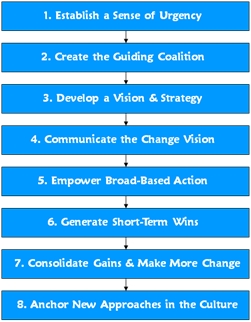
Chart Data Source: John P. Kotter, Leading Change (#CommissionsEarned), Harvard Business School Press
Get a FREE infographic that summarizes Kotter's Leading Change Model.
Video: Anchoring Change in the Culture
Quiz: How Well Do You Understand Anchoring Change
Kotter Leading Change Article Series
The following links will take you to my previous articles about John Kotter’s change model:
Kotter’s 8-Step Leading Change Model (Summary)Step 1: Create a Sense of Urgency
Step 2: Create the Guiding Coalition
Step 3: Develop a Change Vision and Strategy
Step 4: Communicate the Vision
Step 5: Empower Broad Based Action
Step 6: Generate Short Term Wins
Step 7: Consolidate Gains and Implement More Change
5 Strategies for Building Consensus for Organizational Change
This article is accurate to the best of the author’s knowledge.
Content is for informational or educational purposes only and does not substitute for professional advice in business, management, legal, or human resource matters.
